





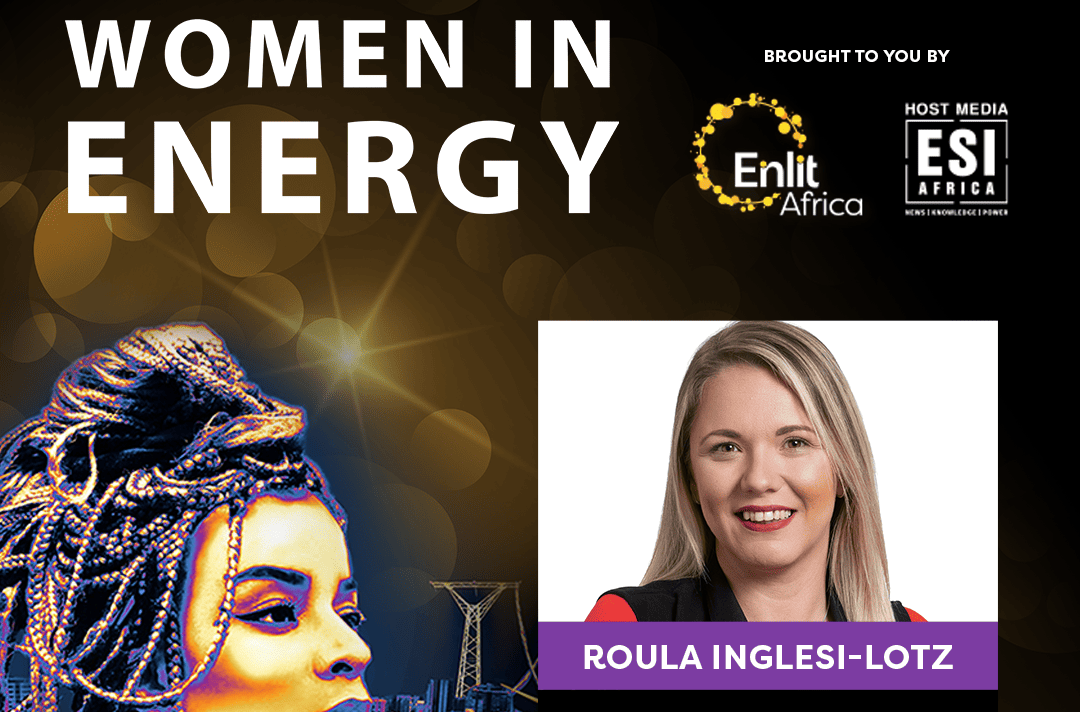
Feature – Prof Roula Inglesi-Lotz, Professor at the Dept of Economics | University of Pretoria

Bio 

Prof Roula Inglesi-Lotz is a Professor in the Department of Economics at the University of Pretoria. She obtained her MCom in Economics (cum laude) and earned her doctorate in economics in 2011 from the same institution. Prof Inglesi-Lotz serves as the head of the Energy Economics Unit at the University of Pretoria and leads the university’s research team in the UNDP Just Energy Transition (JET) platform.

Her research revolves around energy and environmental issues, aiming to address challenges related to conventional energy consumption and generation methods. Prof. Inglesi-Lotz has an impressive publication record, with over 90 academic papers published in reputable international journals and contributions to books and academic and business reports.

Prof. Inglesi-Lotz holds editorial positions in respected international journals, including Energy Policy (JEPO), Energy Economics (ENECO), and Environmental Science and Pollution Research (ESPR). She actively participates in professional organizations, currently serving as the Vice President for Membership and Affiliate Relations of the International Association for Energy Economics. She was also a founding member and President of the South African Association for Energy Economics for four years.

In addition, Prof. Inglesi-Lotz is an alumnus of the South African Young Academy of Sciences (SAYAS) and the Global Young Academy (GYA). Her contributions include serving as a co-chair for SAYAS in 2019/20 and representing low- and middle-income countries as a co-chair for GYA in 2021/22.

Recognizing her accomplishments, Prof. Inglesi-Lotz received the Women in Science prize in the Social Sciences and Humanities categories from the South African Department of Science and Technology (DST) in 2017. She is also an NRF C1-rated scientist, effective from January 2023.

Prof. Roula Inglesi-Lotz’s expertise and dedication in the field of energy economics have made her a prominent academic and leader. Her research contributions and involvement in various organizations showcase her commitment to advancing knowledge and sustainable energy solutions.


Questions

How did you end up in the energy sector and what advice would you give to other women wanting to follow a similar career trajectory?

My journey into the energy field commenced with a focus on economics and academia. I became curious after the early power outages in the nation during my Master’s program in 2008. This sparked my interest in learning about the complexities of the energy sector’s problems and led me to learn more about the areas of energy pricing, its connections to the economy, the creation of policies, and environmental considerations.

I would advise prospective women seeking a similar career track to embrace the interdisciplinary character of the energy sector. By thoroughly examining energy’s various characteristics, we can provide essential insights to inform successful policy decisions, promote sustainable growth, and address significant energy-related concerns. Additionally, I urge educators to stress the value of energy literacy in economics courses.

In your opinion, why do you think the energy sector in its current state has less female representation and do you see it increasing?

Historical, sociological, and professional challenges can be attributed to the underrepresentation of women in the energy sector today. By limiting their participation and influence within the sector, this monodisciplinary perspective unintentionally helped to marginalise women. A requirement for admittance into the energy business is frequently high levels of education and experience, which may have been challenging for women to meet, given historical discrepancies in access to educational opportunities. Moreover, a sizable section of the female workforce may have unintentionally been excluded due to some physically demanding requirements related to unskilled occupations in the sector. Furthermore, this cycle has been exacerbated by the lack of obvious female role models.

Positive change is being sparked by famous female executives shattering stereotypes and promoting an egalitarian workplace atmosphere. This positive cycle is gradually eliminating gender disparities and advancing the industry toward a more diversified future, indicating hope for long-term advancement.

What message do you have for other women entering a male-dominated sector?

It is important to avoid becoming discouraged by underrepresentation. Instead, women should see this as a chance to refute and alter assumptions. Instead of following established conventions, the way forward is to embrace their true self and put their distinctive viewpoints on display. I urge them to be steadfast in sharing their opinions, ideas, and observations. Assist other women, creating a network of mentoring and support. By doing this, young women can increase their influence and amplify the voices and aspirations of those around them.

I want to encourage others to be brave, genuine and strive to be change agents. Advance knowing that by embracing their individuality and unique vision, they are entering a male-dominated industry and starting a transformative journey that will move the industry towards genuine equality, creativity, and greatness.

What opportunities do you see in Africa’s energy market?

The abundance of renewable energy resources, the opportunity for off-grid solutions to reach disadvantaged areas, and the ability to close energy access gaps to promote economic growth, healthcare, and education make Africa’s energy market a promising terrain for transformative changes. The region’s potential is further amplified by novel financing strategies, improvements in energy efficiency, and cross-border integration, while cutting-edge technologies like battery storage and natural gas development present opportunities to overcome current infrastructural constraints and improve sustainability.

Solar potential: Africa’s strategic location along the equator provides abundant solar resources, which are a foundation for developing renewable energy sources. This potential gives a special chance for local manufacturing and job growth in addition to energy generation alone. African nations can use their solar resources to create clean electricity and establish local solar manufacturing sectors, promoting economic growth and sustainability. This is possible as solar technology becomes more widely available and more affordable.

Hydropower potential and Hydrogen economy: The continent’s large river networks and water resources hold enormous hydropower potential. The Grand Ethiopian Renaissance Dam and the Inga Dam Complex are two hydroelectric projects that could be strategically developed to power nearby communities and the developing hydrogen economy. Africa can position itself as a key player in the global shift toward sustainable hydrogen utilization by utilising excess hydropower to produce green hydrogen through electrolysis and providing a clean energy option for various sectors while leveraging its natural resource advantages.

What recent legal or regulatory changes do you think have the potential to make a positive impact on energy access in Africa?

The Renewable Energy Master Plans of Nigeria and South Africa are two examples of ambitious renewable energy objectives and regulations that pave the way for increased clean energy production and enhanced access to electricity. The Energy Act of 2019 in Kenya is a practical example of a practical action that goes along with these regulatory reforms. Initiatives to liberalise the energy sector also encourage private investment and foster healthy competition, as seen in Ethiopia and Uganda. The continent’s congruent international commitments demonstrated by its active involvement in the Sustainable Development Goals and the Paris Agreement, represent a collective desire to advance fair access to energy and sustainable development in Africa.
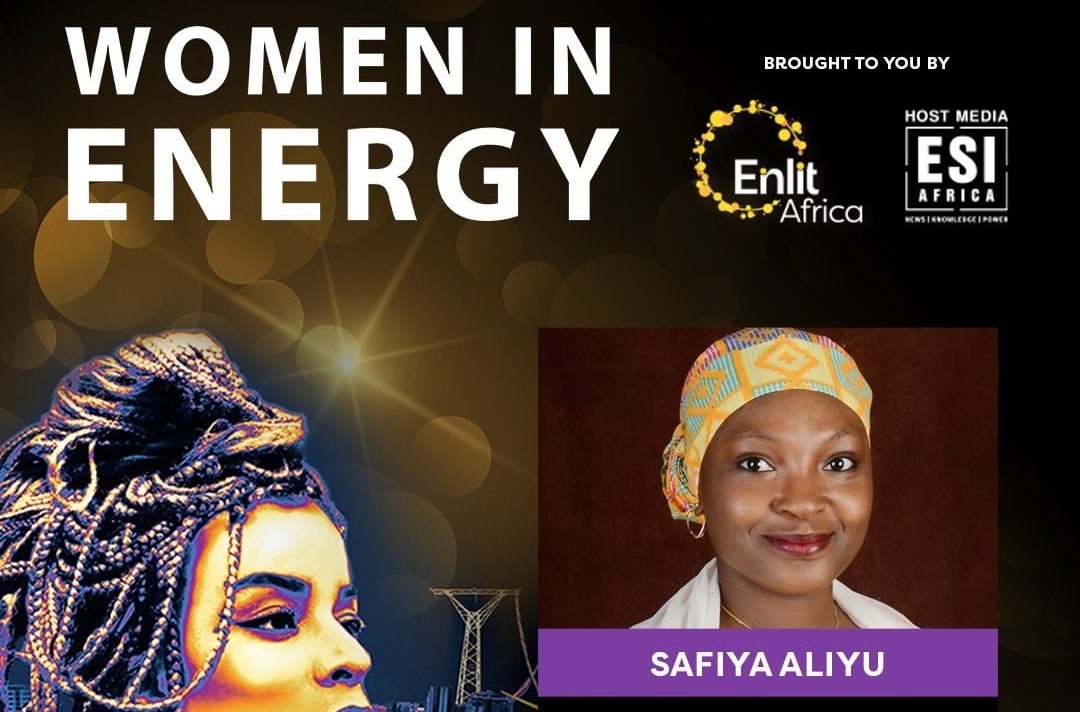
Safiya Aliyu, General Manager at SOSAI Renewable Energies Company

Bio 

Safiya Aliyu joined the Renewable Energy industry in 2007. She has a Master’s in Business Administration. Before her graduation from the university, she volunteered with the Developmental Association for Renewable Energies (DARE) supporting the Solar Cooker Deployment project and the United Nations Framework Convention on Climate Change (UNFCCC) Clean Development Mechanism (CDM) Project on improved cook stove. Upon graduation from the university, she joined Sosai Renewable Energies Company as a Project Officer, she later rose through the ranks to become a Project Manager in which position she managed the Arthur Guinness Fund/ Relief International Water Filter Project.In 2018, she successfully became a Techwomen fellow after 6 weeks training with her team winning a seed loan for their community impact project; MAAMI Nigeria. She also gave the winning pitch of Solar for healthcare in 2022 at the Nigerian Power Sector Program supported by Power Africa. She is the incumbent Treasurer of the Renewable Energy Association of Nigeria.

She has been with Sosai since its inception and is presently the General Manager at the core of Sosai’s transformation journey with a lot of dedication and hard work. Safiya has equipped herself in the field of Renewable Energy with several trainings and is now handling the Sosai’s Matan Arewa Project where women are encouraged and trained to become entrepreneurs in the Renewable Energy Sector. She is an expert in the deployment and management of projects on improved cookstoves, solar systems and community development. She has worked with Sosai team to operationalize 5 offgrid solar minigrids, distributed over 150,000 units of improved cookstoves and 20,000 units of solar lighting solutions. Sosai is estimated to have positively impacted 1,000,000 lives through its solutions and will be doing more as the business grows.


Questions

How does your business actively encourage women’s empowerment and development?

At Sosai Renewable Energies Company, we understand that women are backward when it comes to economic growth, this is because they face significant challenges in accessing technology and infrastructure, which limits their earning opportunities and financial inclusion. We encourage women’s empowerment and development by increasing their access to renewable energy technologies that they can resell or use as a piece of business equipment to earn income. We have established solar drying hubs in rural communities where women groups are the custodians of the hub, running the business to dry farm produce for the farmers in and out of their communities. Through this activity, they are promoting food security and also earning income for themselves.

We also support women with startup stock of solar lanterns, solar home systems, and improved cookstoves that they resell to promote the adoption of clean energy, and earn income for themselves. We train these women groups on the right kind of skills needed to grow their business and ensure it is sustainable. Our work with the women groups has increased their socio-economic status.

What message do you have for other women entering a male-dominated sector?

My message to women entering a male-dominated sector like the energy sector is to be confident, know your worth, and keep increasing your knowledge in the field you have chosen. It is important to believe in yourself and your abilities. Advocate for yourself and other women in the sector. It’s also important to seek out mentors and role models who can help you navigate the challenges of working in the sector because there will definitely be tough times that will even make you doubt yourself but with the support from role models and mentors, one will get the energy to be persistent.

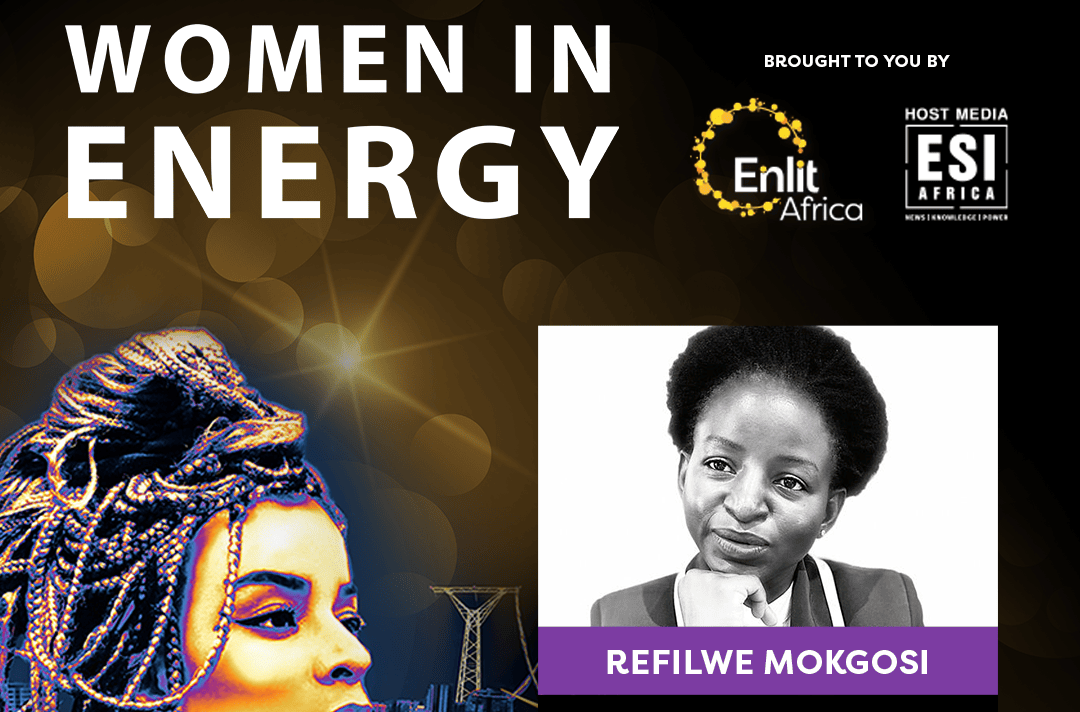
Feature – Refilwe Mokgosi, Chief Area Engineer Ekurhuleni Metropolitan Municipality

Bio 

My name is Refilwe Mokgosi, I am an electrical engineer registered as professional technologist. Employed as Chief Area Engineer responsible for Springs and Nigel Energy Department at Ekurhuleni Metropolitan Municipality. Previously appointed as Executive Director: Public Works in Emfuleni Local Municipality. I am responsible for Electricity Department, Roads AND Stormwater Department and Environmental Management and Planning Department.

I have been in the engineering industry for 21 years. I have been in held several positions with the electricity and energy industry in different municipalities (City of Tshwane, City Power, City of Ekurhuleni) and Eskom (Generation and Distribution).

I hold several qualifications, some being, B-Tech in Electrical Engineering Heavy Current, Government Certificate of Competency (GCC), Masters in Business Leadership (MBL) and Executive Development Management Program

I am ambitious, fearless, self-driven and I multi-tasking. I am immediate past President of Association of Municipal Electricity Utility (AMEU) President and Women in Electricity former Chairperson and Sponsor. I serve at the GCC commission of examiners at the Department of Labour, in several committees including ECSA IDoEW.

Socially I am wife and mother of two boys passionate about sports. I am Runner, Cyclist and aspiring swimmer. Completed 10 comrades’ marathons and 9 Two Oceans. Participated in several cycling events such as 94.7, Cape Argus, one day 3 stage Jock classic, Maluti Double 90, Double Century race and I’m recently aspired triathlon.


Questions

In your opinion, why do you think the energy sector in its current state has less female representation and do you see it increasing?

“The engineering profession and Engineering Council of South Africa (ECSA) registration database still reflects a higher number of male engineering practitioners compared to the female counterparts. While strides are being made to bridge the gap and ensure transformation of the profession, it is acknowledged that more still needs to be done.” The sector still has a significant imbalance between male and female employees. The sector largely been male-oriented in previous years which a concerted efforts to encourage more females to join different roles and we have seen greater improvement though there is still much to be done to level the playing field. If you compare 10 years ago to date, there is significant improving. This will not be an overnight change, but it will take few more years to have balanced sector.

What message do you have for other women entering a male-dominated sector?

My message to women entering this sector or planning to enter the industry is don’t allow any of your colleagues makes you feel you don’t belong here, do you best to master space. Like any other person when you are joining any company spent a lot of time learning the business, knowledge is important, do the tidy work “site visiting, ask as many questions as you could to understand your roles in the business, go extra mile for your sake. Networking is very important there are so much pool of experienced women you can tap into their knowledge. Look for them and make it your priority number one to engage and learn from them. We have groups such as AMEU “women in electricity” etc. they can join to acquire more skill and knowledge.

How did you end up in the energy sector and what advice would you give to other women wanting to follow a similar career trajectory?

Two of my brothers are in similar engineering sector one in mining and the other in telecommuting. They both inspired me so much growing up and all I knew that time was I want to be an engineer. Hence my choice of subject at high school level. A good mentorship is needed to assist in building a good care foundation.

What message do you have for other women entering a male-dominated sector?

I still say when women participate fully in an economy, they form resilient businesses and enable achievement of economic and development goals. The benefits of investing in women expand beyond their immediate families, to their communities and countries, too. Stand your grounds in what you believe and go out there and shine, I believe in you and all you need to do is to believe in yourself.

What opportunities do you see in Africa’s energy market?

The sector is expanding and it’s for us to crab the opportunity to play more in the renewable energy or alternative energy space. There are so many programmes that are available and waiting for us to participate. Read a lot especial the engineering magazines and newsletters. Join webinars and conference to expand your knowledge and grab opportunities.

What role do women play in the decision-making authorities regulating energy transition issues in your organisation?

Mostly women play a leadership role and provide direction. It is natural for women to produce solutions in a complex environment. Be part of committees that deals with industry policies, volunteer your time, and forget about the rest, and all will fall into places. As women you need to be self-driven and if you don’t have that character, you better build it because no one is going to come push you, you must push yourself to the limits.

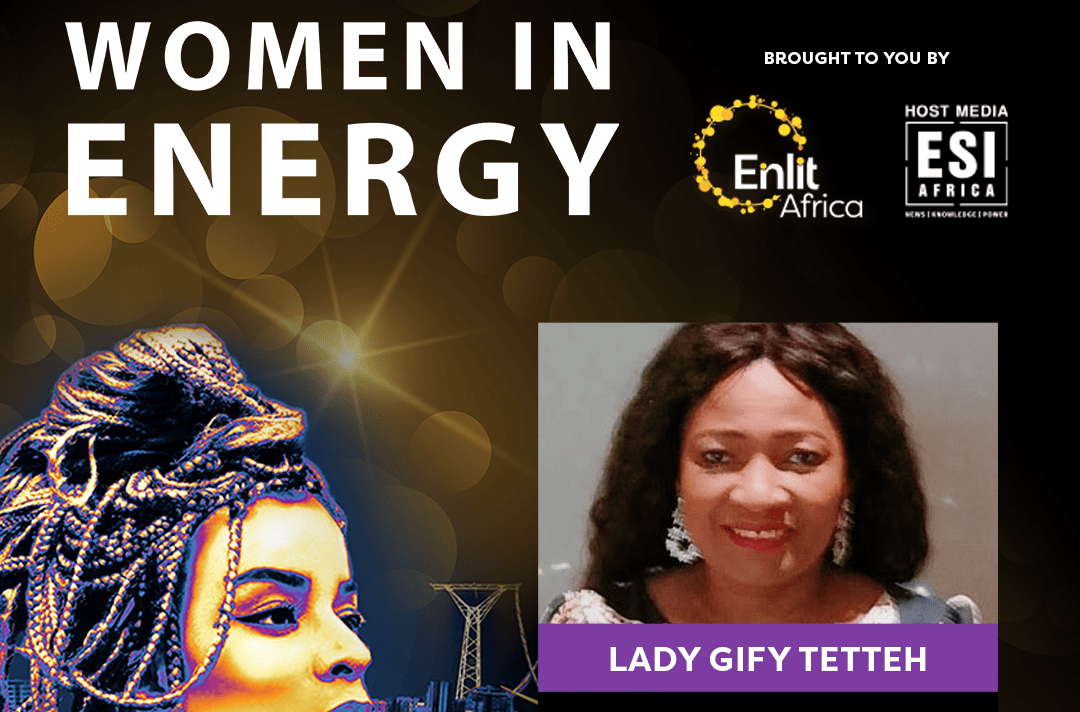
Women in Energy Feature – Lady Gify Tetteh, CEO of Africa Women in Energy

Bio 

Lady Gifty Tetteh was admitted to the Bar of England and Wales in 2000; she is a barrister and the Head of Chambers/CEO at Chambers of GD Tetteh in the United Kingdom; she is a member of the Honourable Society of the Middle Temple; and she was the first black woman to establish her Chambers in the Honourable Society of the Middle Temple. Lady Tetteh is the CEO of Rehoboth Chambers (Tetteh and Tetteh Advocates) in Ghana. She was admitted to the Ghana Bar in 2003 and is a Solicitor and Barrister of the Supreme Court of Ghana. In 2012, she was appointed a Notary Public in Ghana.

She obtained a Bachelor of Laws (LLB) with honours from London Guildhall University, a Postgraduate Certificate from the University of West of England, Bristol, and a Master of Laws in Oil and Gas (LLM) from Robert Gordon University – Aberdeen. Lady Tetteh is a listed Counsel/Advocate at the International Criminal Court – The Hague and serves as the Chair of the International Criminal Court Bar Association-ICCBA for 2021/2022 and 2022/2023. She has lectured local authorities across the United Kingdom on child/human trafficking, child protection and safeguarding issues as well as on the law in general. She is an entrepreneur, a mentor, a motivational speaker, and an author.

She is the founder and president of both the Africa Women in Energy (AWIE) and Africa Women in Farming Organisation.

She is a trustee for charities in the United Kingdom, a board member, and the UK Chairperson of the Heritage and Culture Society of Africa – HACSA. Lady Tetteh is the patron of Kaybobo Girls School in Nkwanta — (The Ghana Education Project). She is passionate about energy efficiency, sustainability, and empowering women to realise their aspirations and having their positions, skills and expertise recognised within their chosen industry of work.


Questions

What do you see as the role of women in ensuring energy security and resilience in the power sector?

The need for advocacy for sustainability is crucial in the sector and women often play a significant role in advocating for sustainable practices, renewable energy and environmental protection. Their involvement in the power sector can help prioritise sustainable energy sources, reduce carbon emissions, and promote eco-friendly technologies. Further, women can help bridge the gap between energy projects and the need for community involvement, ensuring that projects are culturally sensitive and socially responsible.

How do you hope to see women more included in the energy sector?

Encourage girls and women to pursue education and training in STEM fields, providing scholarships, mentorship programs, and targeted training opportunities. Another very important factor is the elimination of gender biases.

In addition, promoting female role models, and highlighting and celebrating the achievements of women in the energy sector can inspire and motivate other women to pursue careers in the field as well as encourage those who are already working within the sector.

How does your business actively encourage women’s empowerment and development?

At Africa Women in Energy (AWIE), we promote and encourage women through Diversity and Inclusion Policies. We encourage policies that would ensure that women receive equal pay for equal work, and we promote formal mentorship and sponsorship programs that pair female employees with experienced leaders in their sector who can offer guidance and advocacy for their career advancement. We promote the concept of flexible work arrangements, such as remote work options or flexible hours, to support work-life balance for women.

What message do you have for other women entering a male-dominated sector?

As you step into this challenging environment, remember that your presence is not only valuable but essential in reshaping the landscape of the industry. You bring diverse perspectives, fresh ideas, and innovative solutions that are desperately needed in male-dominated sectors. Do not let anyone make you feel like an outsider or question your abilities. You belong here, and you have every right to claim your space. Above all, remember that you are deserving of success and happiness.

What recent legal or regulatory changes do you think have the potential to make a positive impact on energy access in Africa?

Following the Paris Agreement and COP 27, African countries have been preparing for the energy transition by implementing policy and legislative frameworks that account for the energy crisis and the need for a renewable, decarbonized, decentralised energy supply that addresses climate change. Countries such as Egypt, Ghana, Kenya, Morocco, Namibia, Nigeria, South Africa, Tanzania, and Uganda have all outlined the steps their governments have taken to address the pressing need to harness renewable energy, which is anticipated to present investors with exciting opportunities in the African energy sector.

At a meeting in Lusaka, Zambia, the Executive Council of the African Union (AU) adopted the African Common Position on Energy Access and Just Transition (JET). The Commissioner for Infrastructure and Energy, Dr Amani Abou-Zeid emphasised the importance and major step towards ensuring and confirming Africa’s right to a differentiated path towards the goal of universal access to energy, ensuring energy security for our continent and strengthening its resilience, while at the same time acting responsibly towards our planet by improving the energy mix.

What opportunities do you see in Africa’s energy market?

Solar energy has the potential to become the primary energy source in all African countries. Africa has the highest solar potential in the world, with 40% of the world’s theoretical reserves. This presents a significant opportunity for the growth and development of the solar energy market in Africa. In addition to solar energy, Africa has great endowments and potential in other renewable energy sources such as water, wind, biomass, and geothermal energy.

Tlholohello Lolo Motsamai, Founder and Executive Director at SHE in Energy Africa

Bio 

I have a decade plus experience as a business development and marketing executive with a demonstrated history of working in the financial sector (banking), construction material supply, the built environment industry (Architecture & Townplanning) and the energy sector.

Academically, I have an IT qualification which I have never used in my career and have rendered the qualification obsolete as mine has always been a flair towards sales and marketing. I have completed the Management Development Programme through the UFS Business School, various online training programmes through the RENAC Renewables Academy and currently a trainee with the institution for the Energy Transformation Expert Programme (EnerTracks). I am also the representative for the RENAC Green People’s Energy for Africa Alumni Network (ANSAP) and my ultimate academic goal is to pursue an MBA in Renewable Energy through the Alma Mater the RENAC Renewables Academy.

I am passionate about gender advocacy and out of passion, excitement and frustration, founded SHE in Energy Africa (NPC) which seeks to narrow gender disparities in the energy sector through skills development and training and to accelerate women’s role not only as professionals but as entrepreneurs in the energy sector. The highlights in my gender advocacy journey, was serving as the country chairperson of African Women in Energy and Power and for being one of the first cohort to participate in the WE Connect Mentorship supported by SAPVIA and SAWEA.

My favourite qoute and also my credo is by Oprah Winfrey; the best deterrent to racism and sexism is through excellence.


Questions

How did you end up in the energy sector and what advice would you give to other women wanting to follow a similar career trajectory?

I matriculated back in 1999. “IT” (Information Technology) was the buzzword, and inevitably, in 2000, I enrolled in an IT Diploma, a qualification I have rendered obsolete as I have never used it in my entire career. Interestingly, it was while I was working at the institution on a part-time basis as a student advisor that I discovered my love for sales and marketing. Fast forward to 2003, I landed a job in the financial sector at ABSA bank as a retail sales consultant. After 3 years with the financial institution, I decided to leave my hometown, Bloemfontein, and relocated to Johannesburg, looking for greener pastures.

Completely by chance, I was introduced to the energy sector/solar industry where I worked as a sales representative, marketing, and selling solar water heating systems at the company Solar Heat Exchangers. While at the time, I didn’t envision staying long in the industry and ultimately building a career as an entrepreneur, gradually I fell in love with the idea that water could also be heated using the sun/solar energy generated through panels. At the same time, preserving the environment due to renewable energy technologies being less carbon-intensive. As the saying goes, the rest is history.

In your opinion, why do you think the energy sector in its current state has less female representation and do you see it increasing?

I think the perception that one has to come from a technical/engineering background, and rightfully so, I suppose, as the sector is highly technical, is also a contributor to the lesser female representation in the sector and industry. And again, this is where the importance of introducing, educating, and exposing such sectors, industries, and career opportunities, particularly to the HDI, is very important. On a positive note, I strongly believe we are going to see more participation by women, whether as professionals or entrepreneurs, in the sector and industry, thanks to policies supporting gender equity and mainstreaming in both the sector and industry.

If you could have tea with any public figure – dead or alive – who would it be and why?

So, I have a great love for music, something I got from my folks, with quite an eclectic taste. Nina Simone and Miriam Makeba are the two women I would want to meet with, I think we could start off with coffee and later wine, because there would be so much to talk about, not just musically but politically. I love how they both used their gift as musicians for a bigger purpose, which was political activism. It’s something I myself used to be very passionate about but have toned down as I grow older.

What does being a woman in the energy sector mean to you?

Being a woman in the energy sector, for me, means working twice as hard as my male counterpart. I feel that one constantly must prove oneself, not only just to be seen but also to be heard. This is very important to have a voice in the sector and industry, not just on issues of gender but also on sector developments and challenges.

What opportunities do you see in Africa’s energy market?

The African continent, which is endowed not only with minerals but also with energy sources, whether it’s solar, wind, or gas reserves, presents a plethora of opportunities that could boost the continent’s economy beyond what we could imagine possible as Africans and as a unified unit. This is achievable only if the continent is well governed.

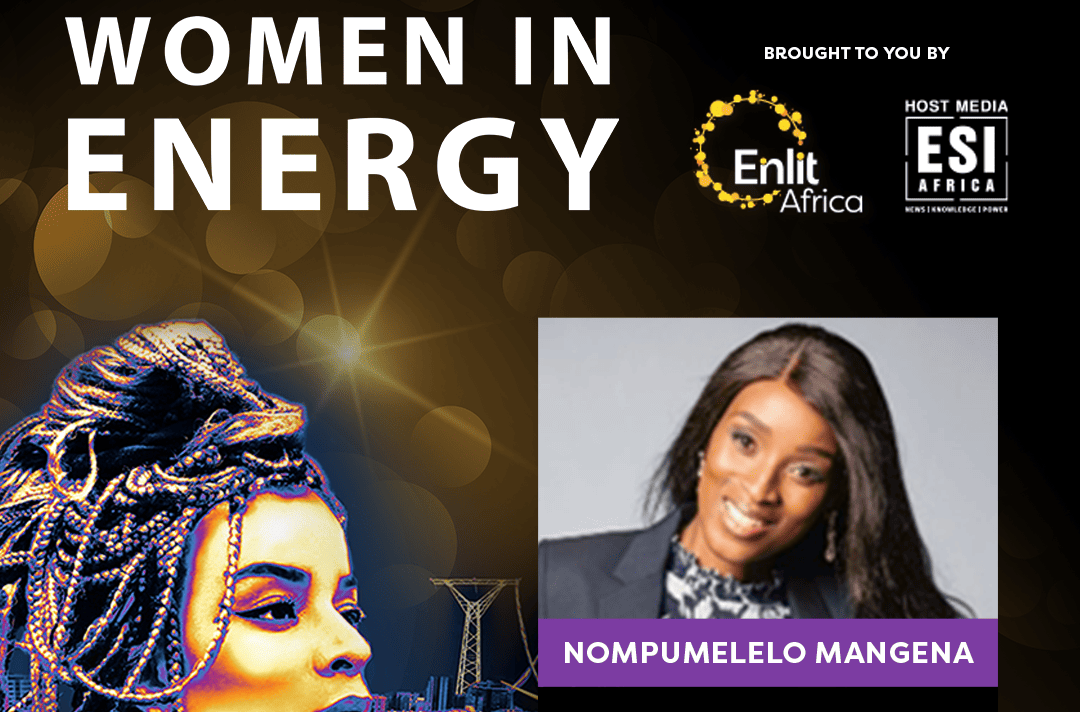
Feature – Nompumelelo Mangena, SSA Senior Sales Manager, GE Vernova’s Steam Power

Bio 

Nompumelelo (Mpumi) Mangena is the Senior Sales Manager for GE Vernova’s Steam Power business in Sub-Saharan Africa. GE Vernova’s Steam Power business offers a broad portfolio of technologies and services—predominantly for nuclear and coal power plants—helping customers deliver reliable power as they transition to a lower-carbon future.

Mpumi joined GE in 2012 as a Sales and Services Manager for its power portfolio. Prior to GE, she was a System Engineer at Eskom Matla and Kelvin power stations. She has acquired over 17 years in experience working in the energy industry locally and internationally. Her experience spans through the private and public sector with a combination of system engineering, business management, sales and marketing background and a key focus on stakeholder management. This experience has allowed her to develop a strategic set of contacts and relationships across the private sector as well as within government.

Mpumi earned a Bachelor of Technology degree in Mechanical Engineering from the University of South Africa. She just completed a Post-Graduate diploma in Coaching with the South African College of Applied Psychology.

She is an energetic, positive, and strong individual that will take lead in almost any situation.  She currently resides in Pretoria with her adorable 7-year-old boy and supportive husband. When she’s not working you will find her playing Golf, traveling, coaching and mentoring aspirant and early-mid career professionals.

Questions

What are some of the major changes you’ve seen during your time in this industry?

I have seen more women joining the sector, seen them taking leadership roles, and I have unfortunately seen women leave for several reasons including environment readiness and lack of support. Develop a welcoming and inclusive workplace culture that promotes opportunities for advancement and flexible work arrangements to encourage entry and retention into the sector.

What message do you have for other women entering a male-dominated sector?

The industry is difficult, but you are not alone. There is a strong community of women you can reach out to in the sector for advice, community, and support. Embrace your strengths, build your knowledge of your specific industry, network, and constantly advocate for yourself.

How do you hope to see women more included in the energy sector?

By intentionally recognizing women as capable participants in the sector not as affirmative statistics. We need to identify, recruit, hire, train, promote and retain on merit. This will go a long way in including and expanding the sector to women.

In your opinion, why do you think the energy sector in its current state has less female representation and do you see it increasing?

I don’t believe it is increasing. I think the industry is not glamorized like other industries due to gender stereotypes and traditional societal norms which have influenced the perception of what roles are for women. Technical and engineering roles have traditionally been seen as roles designed for males. Many of the opportunities are in STEM (Science Technology Engineering Mathematics) and the underrepresentation of women in STEM creates difficulty in building and developing a pipeline. If we do not deliberately create spaces and accommodations to invest in bursaries targeted at females or apply visible mentorships to aspiring learners, representation will not increase. The struggle to strike work-life balance due to the constant requirement to be available at all times is another barrier to achieving the representation we want to see.

How do you think men can support a more equal workplace as well as help accelerate women in their careers?

We cannot leave men behind in the advancement or inclusion of women in the sector. In my experience I have seen men supporting the acceleration of women. It starts with the education and awareness of men around issues that affect women so men can understand their predisposed privilege, identify and confront their unconscious biases.

What is the most important conversation we should be having in the sector?

How to open up the sector to have greater participation for women within energy. The discussion should be centred around how we create stronger PPP (Private-Public-Partnerships) to build and support SMEs. On a micro level, we should also be discussing how to improve work environments and manage the high level of work pressures to achieve the best results.

What opportunities do you see in Africa’s energy market?

The recent BRICS summit in SA has shown an increase in the appetite for stronger geopolitical ties between Africa and China.  China has pledged R500m to assist the energy crisis in South Africa, this provides opportunities for funding which have been a challenge for African projects. Energy access offers a great opportunity as a significant population still lacks access to electricity.  This gap represents an opportunity to implement off-grid mini-grid systems and distributed renewable energy projects to provide power to remote and underserved areas.

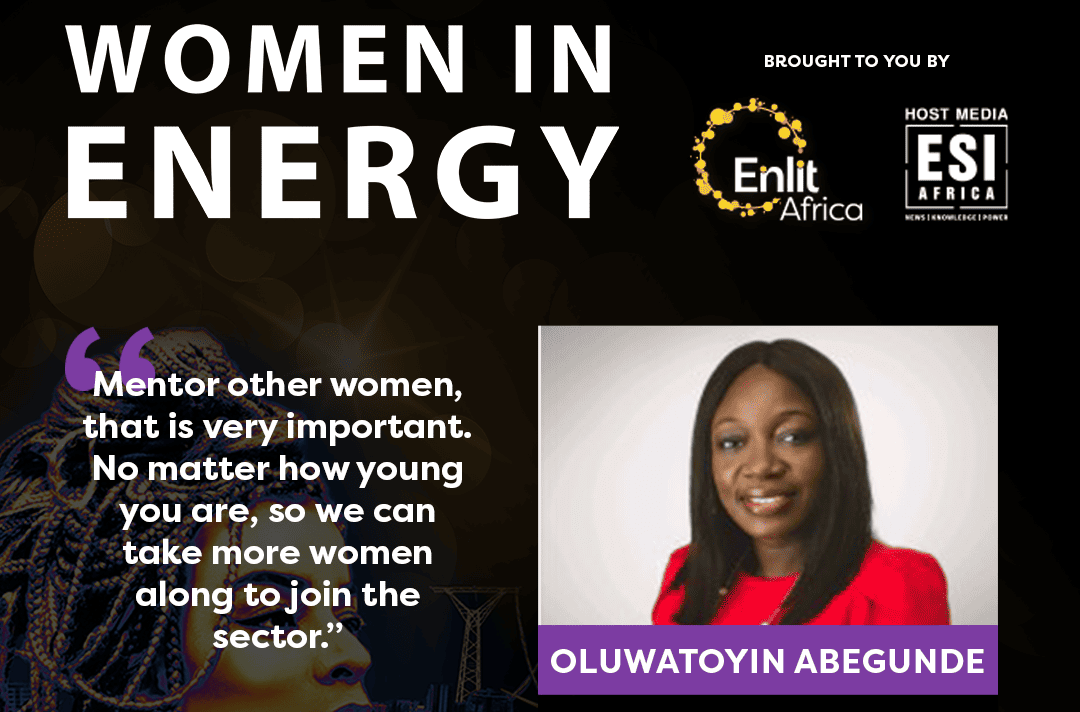
Interview – Oluwatoyin Abegunde, Regional Commercial Development Executive, GE

Watch our interview with Oluwatoyin Abegunde

Oluwatoyin Abegunde (fondly known as Toyin) is a true powerhouse in the industry, she is the

Regional Commercial Development Executive, at GE . Sub-Saharan Africa.

As the Commercial Development Executive for the Aeroderivative turbines in Sub-sahara Africa, her role is focused on delivering volume and backlog growth for the Aero product line in SSA.

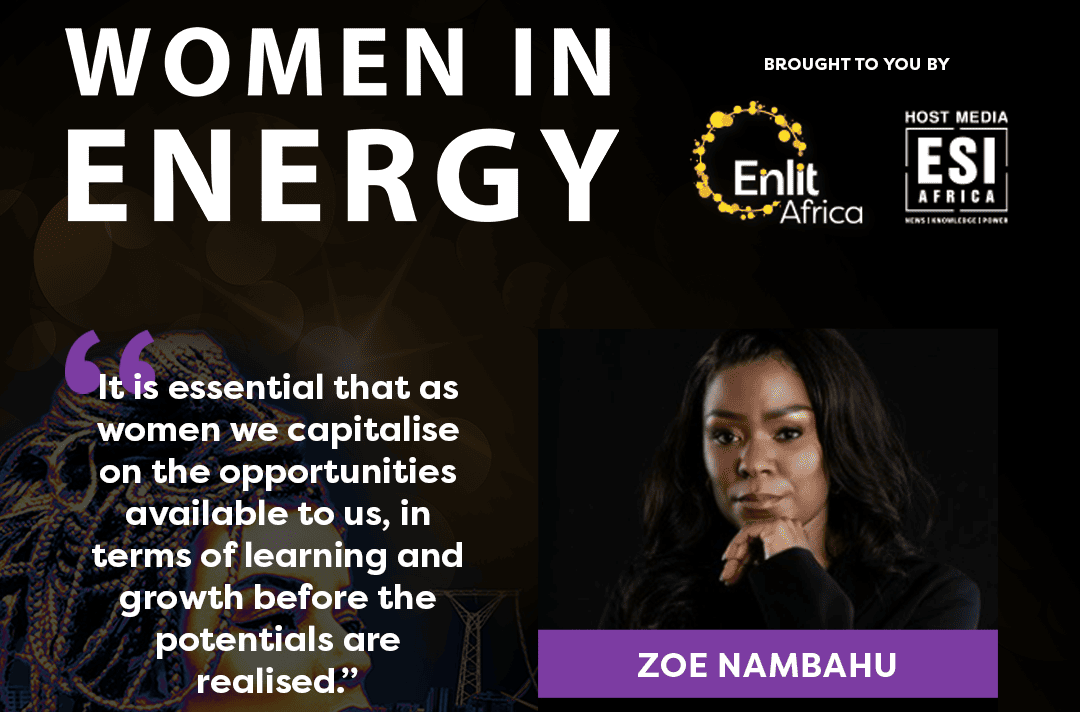
Interview – Zoe Nambahu, Chief Legal, Compliance & Company Secretariat at NamPower

Watch our interview with Zoe Nambahu

“It is essential that as women we capitalize on the opportunities available to us, in terms of learning and growth before the potentials are realized.”

These are the words of the phenomenal Zoe Nambahu, Chief Legal Advisor, Compliance and Company Secretariat at Namibia Power Corporation – heading legal and governance advisory, compliance, business process mapping, preferential procurement compliance and the Aviation division.

She is also a Non-Executive Director and Chairperson of the Erongo RED Board of Directors, a Non-Executive Director on the Board of Hollard Life and Hollard Insurance Namibia and an External Trustee on Alexander Forbes Umbrella Funds.

Watch here: https://youtu.be/BNsTUAOCCoI?si=kCiaXL0pgZzMXcXU

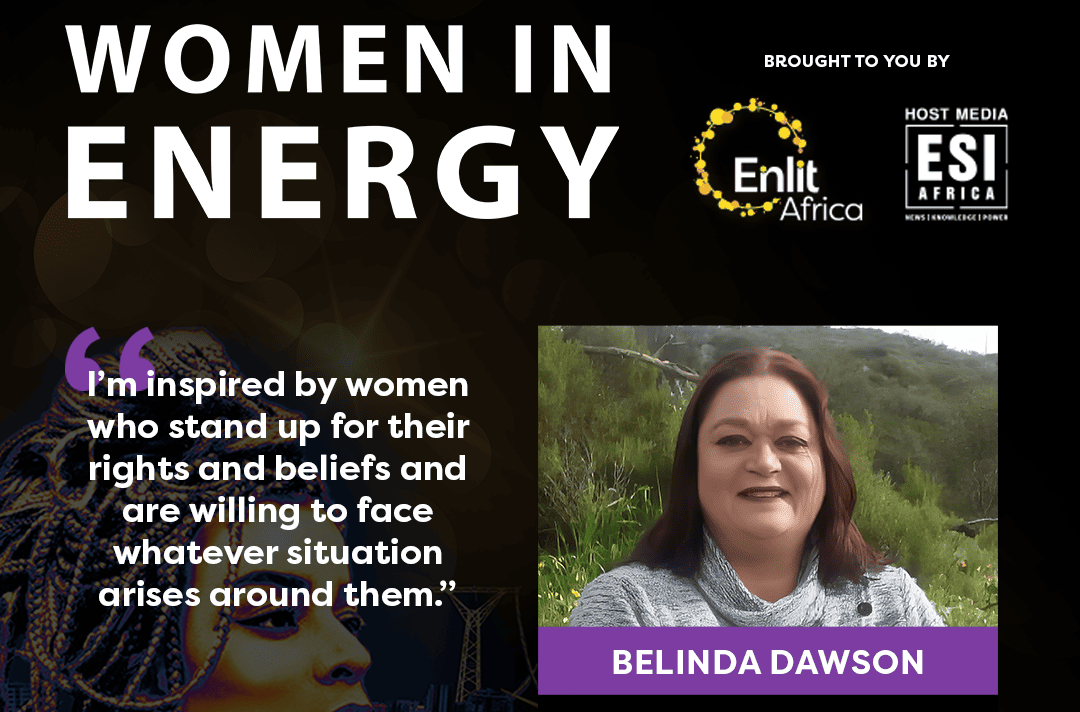
Interview – Belinda (Marais) Dawson, Senior Technical Support Officer: SARPA President

Listen to our interview with Belinda Dawson

In this episode, Claire Volkwyn, Head of Content for Enlit Africa, sits down with Belinda Dawson to discuss her journey as a woman in Africa’s energy industry.

Belinda is a powerhouse in her field, serving as the Senior Technical Support Officer at the Electrical Department for Swartland Municipality. Not only that, she’s also the President of the Southern Africa Revenue Protection Association (SARPA).

With a wealth of experience as a Revenue Protection Specialist, Belinda’s expertise shines through in areas such as customer service, data analysis, credit control, and management. Her strong public relationship, investigative, and negotiation skills make her a true force to be reckoned with!

Listen to the podcast to gain valuable insights and inspiration from one of the leading women in the energy industry: