





Why are women still unequal if they legally have human rights?

Why are women still unequal, even though they legally have human rights? 

This is a question I’ve been reflecting on this week, especially in the wake of Nelson Mandela Day, a moment meant to honour freedom, justice and the human rights so many fought for in South Africa. I reflected on the freedom it brought for this nation’s women, and not to mention, women of colour.  

However, despite having one of the most progressive Constitutions in the world, meant to sew the principle of equality into the nation’s legal blanket and prohibit discrimination based on gender, inequality persists. 

On paper, South African women are free and equal. However, in practice, the story is a lot more complex. 

Have you read? 
Honouring Mandela’s Legacy by Uplifting Women 

Women make up the majority of the South African population, yet according to the PwC’s 2023 Executive Directors Report, fewer than 1 in 5 CEOs are women.  

While there are many reasons for this disparity, including historical exclusion, systematic design or societal beliefs, the answer to the question comes down to just one factor: Access.  

Access opens the door, equality walks through it 

Access is the first step. It opens the door and simply equality walks through it. 

Women in South Africa face disparities in access as it pertains to economic opportunity, education, digital connectivity, land ownership, healthcare and leadership roles. As a result, women are forced to perpetuate a cycle of poverty and dependence. Women are underrepresented in the workforce, especially in STEM fields, and overrepresented in low-paying sectors. 

Women occupy a meagre 32% of managerial positions, despite being a majority of the population, and perhaps the question of access has quite a bit to do with that.  

If we remove barriers to access, we can give people the ability to show up, to lead and to compete in a system that has them in mind. For example, most institutions were built by and for men, not taking into account women’s realities. This is why economic and legal tools, including gender-transformative policies, are so essential.  

Have you read? 
Building a united Africa: A call for gender-inclusive leadership 

Unleash access, unleash innovation

Suppose we dismantle barriers to access and create spaces that champion empowerment and inclusion. In that case, we can increase the representation in the room and turn the poverty cycle into a cycle of empowerment: one that dismantles centuries of inequality and ensures equitable access to resources and ensures the race is run with a levelled starting line.  

When we give access to previously excluded groups, we challenge the status quo, we shift policies, reimagine leadership and grow the circle of influence. Before we talk about equality of outcomes, we must first ensure equality of entry.  

When we remove barriers, we unleash innovation, expand talent pipelines, and build stronger, more resilient communities. Access gives women the power to fully participate in shaping the economy, society or their own lives. Without access, equality remains a theory. With it, we begin to build a world where everyone has a fair shot. 

If our social and institutional systems cannot deliver on the equality the law promises, then it is up to us to step in, break barriers and create access. 

Be in the room.  

Join the women, the leaders and the barrier-breakers rewriting the future. Get your ticket for WomenIN Festival 2025, happening 13–14 November in Cape Town, because access starts with showing up and the future belongs to those who do. 

Honouring Mandela’s Legacy by Uplifting Women

As long as women are bound by poverty and as long as they are looked down upon, human rights will lack substance… as long as outmoded ways of thinking prevent women from making a meaningful contribution to society, progress will be slow.” — Nelson Mandela

Each year on July 18, we pause to celebrate Nelson Rolihlahla Mandela, the founding father of our democracy and a tireless advocate for equality for all. Mandela understood that true liberation could not be achieved if women remained oppressed, and he consistently used his voice and platform to champion the rights of women, both during and after apartheid.

“Freedom cannot be achieved unless women have been emancipated from all forms of oppression,” he famously declared in 1994.

He surrounded himself with women who were fierce, intelligent, and driven—women who led movements, fought injustice and nurtured resilience into the very fibre of South Africa’s democracy.

To honour Mandela’s legacy, we must also honour the women who fought beside him and those who continue to lead today. Because as long as women remain bound by poverty, violence, and limited opportunity, human rights “will lack substance.”

A long road to gender equality

When I think of the women who helped shape South Africa’s democracy, I think of the indomitable Winnie Madikizela-Mandela, who carried the resistance through the darkest days; the bold and brilliant Miriam Makeba, our Mama Africa, whose voice echoed the cries for justice across continents; Albertina Sisulu, a nurse and activist whose quiet strength helped shape the future of South Africa; Helen Suzman, a lone voice in parliament for 13 years; and Lilian Ngoyi, a trade unionist and political leader, who led 20,000 women in protest against pass laws. These women weren’t just supporting acts, they were architects of change.

While the continent has made major strides since the days of apartheid and colonial rule, African women continue to face deeply rooted inequalities. Across sub-Saharan Africa, women make up nearly 70% of the informal economy, with limited access to financial services or legal protection. According to the World Bank, only 58% of women in Africa participate in the labour force, a number lower than that of men, and they are more likely to be unpaid or underpaid for the same work.

The numbers point to the ongoing need for structural transformation and gender-sensitive policy reform.

Yet perhaps the most insidious barrier lies in perception, societal norms that still place women on the periphery of power and leadership. Without access to education, capital, or networks of influence, many women are still excluded from the spaces where decisions about their lives are made.

Women who are rewriting the story

Despite the odds, African women are rising and redefining what leadership looks like. Ngozi Okonjo-Iweala, Nigeria’s former finance minister, now heads the World Trade Organization, becoming the first African and first woman to do so. Her work proves that African women belong at the highest global economic tables.

Closer to home, Dr Judy Dlamini, a South African businesswoman, medical doctor, and chancellor of Wits University, has consistently used her influence to advocate for inclusion and women’s empowerment in both education and enterprise.

From entrepreneurs building tech start-ups in Kigali to rural leaders running green agriculture initiatives in Limpopo, women across Africa are actively shaping the continent’s future. They are not waiting to be invited: They are creating space, lifting others and demanding that their voices be heard.

As we celebrate Nelson Mandela’s legacy, let us honour the women who made his dream a reality and those who continue to carry that dream forward.

Let us commit to doing more than remembering history, let us shape the future.

Be part of the movement.

Join us at the WomenIN Festival 2025 from 13-14 November 2025, where bold ideas, impactful conversations, and limitless women come together to drive change.

🎟️ Tickets from R1499: www.wearewomenin.com/win-festival

Building a united Africa: A call for gender-inclusive leadership

Read more
Women’s History Month: Let’s make history, together!

Women: The catalyst for unity in Africa we’ve been looking for?

Read more
Why Women Must Collaborate: Because Together, We Are Unstoppable!

Women making waves in Africa

The business case for working mothers: Debunking the mother of all myths

Somehow, along the way, society adopted a troubling stereotype: that when women become mothers, they become less valuable in the workplace and are, in turn, more of a liability than an asset. However, research tells a different story.

Instead of hindering professional performance, motherhood often enhances it. In fact, a foreign study by the Federal Reserve Bank of St. Louis found that working mothers often bring unique strengths and perspectives that companies would do well to celebrate, not sideline.

South African women have participated in the formal workforce for over a century, and only within the last three decades have they received meaningful legal protection from workplace discrimination related to childbearing. Thanks to the country’s progressive constitution, the Labour Relations Act of 1995, and the Basic Conditions of Employment Act of 1997, women are now safeguarded from being dismissed or treated unfairly because they choose to have children. These laws have significantly shifted how employers treat and think about working mothers.

In recent years, we’ve even seen the rise of “pumping rooms” in office spaces: designated private areas where breastfeeding employees can express milk comfortably. These small but powerful changes reflect a growing understanding that supporting mothers at work isn’t just the right thing to do, it’s a smart investment.

Yet, despite all this progress, the gender gap in South Africa remains stubborn and so do the stereotypes. The idea that working mothers can’t be fully committed to their jobs continues to shape hiring, promotion, and workplace culture in subtle and not-so-subtle ways.

Working motherhood: A double-edged sword

What working mothers really bring to the table

Celebrating working mothers beyond mother’s day

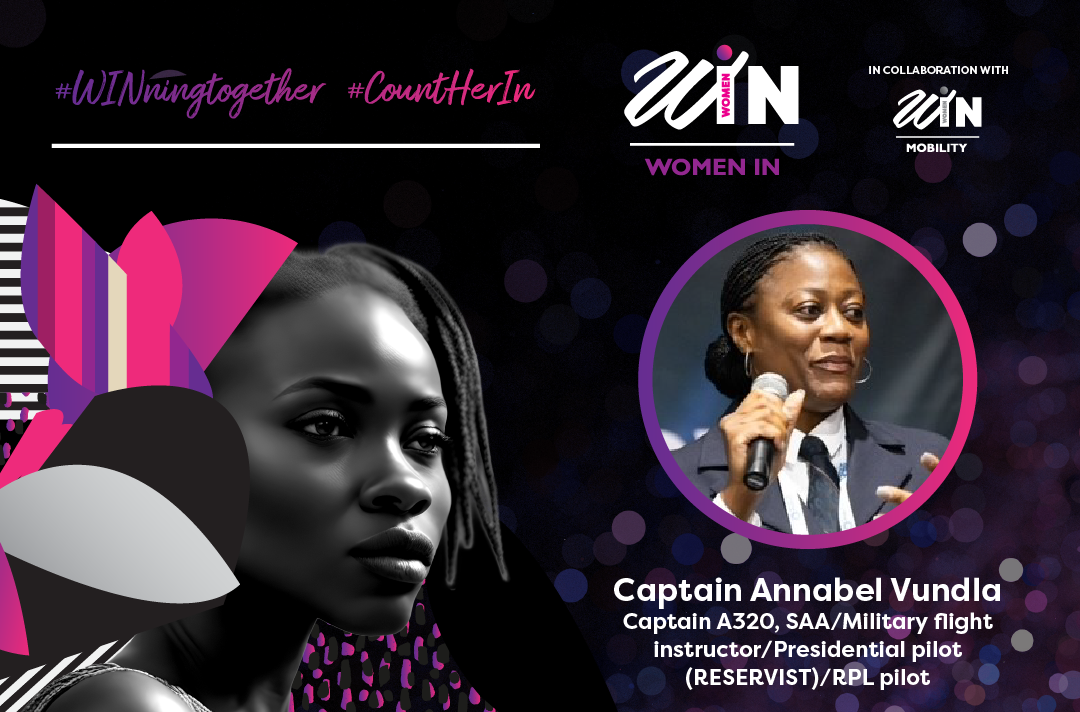
Captain Annabel | Pioneering Female Pilots| Breaking the Mold in Aviation & Mobility

Captain Annabel Vundla  

Captain A320  

SAA/ Military flight instructor/Presidential pilot(RESERVIST) /RPL pilot 

Let’s deep dive into the phenomenal Captain Annabel Vundla’s bio and her achievements to date! 

Originally from Mafikeng, North West, Captain Annabel has harbored a deep passion for aviation from an early age. She began her career in the South African Air Force in 1999 and achieved a historic milestone as the first Black female pilot and instructor in the South African Defence Force. From 2005 to 2010, she was the sole woman of color entrusted with flying democratically elected heads of state. In 2010, she joined South African Airways, where they initially flew the Boeing 737-800, then transitioned to the Airbus A320. Notably, Captain Annabel became the first Black female captain of an airline in South Africa. Captain Annabel and her team are dedicated to the safe transportation of passengers by air. In addition to ensuring the well-being of passengers, she is responsible for overseeing the crew and maintaining the technical status of the aircraft. 

“I am  committed to inspiring women to chase their dreams and persevere in the face of challenges.”  Captain Annabel Vundla  

Know of a phenomenal women doing amazing work that you would like to shine a spotlight on, this could even be you. If so, please send an email to nazlee.fredericks@wearevuka.com. 

Elizabeth stresses the importance of empowering women in the power and energy industry

Women in the power and energy industry need to be empowered in business so that policies and strategies represent their needs, says Elizabeth Marabwa, Chief Director at South Africa’s Department of Mineral Resources of Energy.

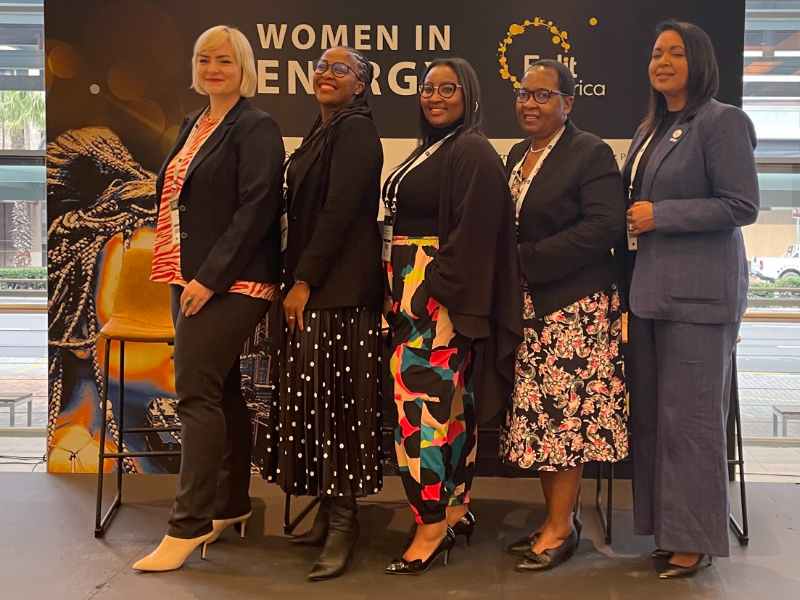
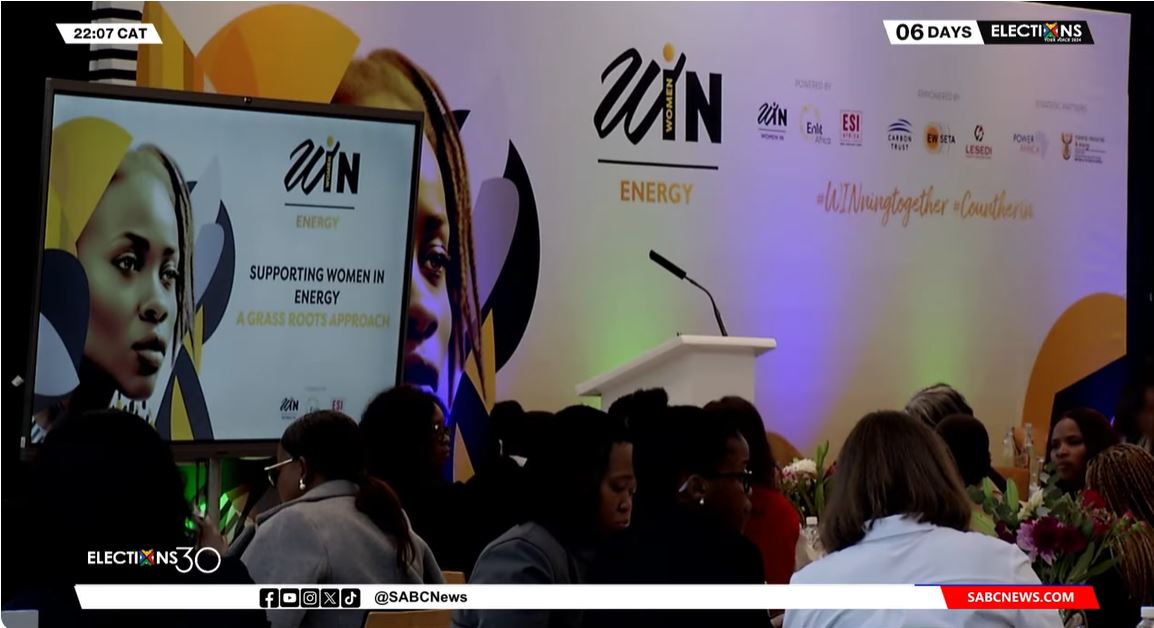
To kick off Day 2 of Enlit Africa 2023, women and men across the energy value chain gathered at the Women in Energy Breakfast to discuss pertinent issues surrounding the inclusion of women in the power and energy sector.

The aim of the session, supported by the Energy Council of Canada, was to consolidate the collective experience, influence and positioning of women in the industry.

Nthato Minyuku, Africa Head of Government Affairs at Siemens Energy, said that this was “to make sure that our daughters, our nieces, our grandchildren are not being pioneers the way most of us are being pioneers now.”

The role of policy-making in women empowerment

During the session, Marabwa touched on the value of policy-making in creating space for women in the industry. She emphasised that it is critical and strategic for women to be included in decision making so they can weigh in on what is just/fair for women.

“It is important for women that when papers and policies are sent out for comment, you participate so that we include your voice and represent [women],” she said.

Have you read?
Chioma Ewurum unpacks the unique opportunities for women in renewable energy

Pointing out the structural issues that exist which exclude women from participating, Marabwa said that women in policy must be spokespeople for women without a platform and leave no one behind. “We are the change agents,” she said.

“We need to make sure that we capacitate and reskill everyone who is affected so that we include all women… We need to make sure that our policies and strategies have [women’s] voices and are gender-sensitive,” Marabwa added.

Creating spaces to be led by women

Raksha Naidoo, Chairperson of Women in Mining South Africa and CEO of the Particle Group, said women are objectively better leaders as they lead with empathy and a holistic mindset which bring about great change.

Naidoo also pointed out that there are things that can be done from a Just Energy Transition perspective that can create space for women.

Pre-register for Enlit Africa 2025, taking place on 20-22 May at the CTICC in Cape Town, South Africa

“It has become so important in any industry that the conversation takes place with the right people around the table and the opportunities are given to the right people who can bring about change,” Naidoo added.

“If we don’t start changing our way of thinking and our narrative, no change is going to happen,” she said.

“It has become so important in any industry that the conversation takes place with the right people around the table and the opportunities are given to the right people who can bring about change,” Naidoo added.

“If we don’t start changing our way of thinking and our narrative, no change is going to happen,” she said.

Of interest to you
When last did you see a female electrician?

Recommendations for Women in Energy

Closing off the session, Phemelo Mitchell, Head of Renewable Energy Business Development at Sasol, said that it is time for women in the energy and mining space to find other women who pull them up and empower them.

She encouraged women not to shy away from networking, but rather to build their platforms through interactive networking spaces and to take an influential role in ensuring that gender inclusivity can be impactful.

Have you read?
Ed’s note: Act on the gender wage gap to fully embrace Women’s Day

Mitchell also said that allies of women and women themselves need to advocate for family-friendly policies so as not to give discrimination breeding room in the workplace.

“You will never be ready for anything, but you must make yourself ready by aiming and thriving to be in those leadership positions,” she said.

Lastly, she added that women need to celebrate each other’s achievements to uplift and empower each other because creating gender-inclusive workspaces requires a collective effort. ESI

WIE women in energy strip banner